
Rodent Control in Reno
Rodents are among the most common calls B's Weed & Pest Control Services receives from homes and businesses near Reno, Sparks, and Carson City. Mice, rats, and chipmunks all live here, and each causes its own problems.
Why Rodents Are a Reno Problem
Rodents follow food, water, and shelter, and a growing city supplies all three. Around Reno, rodent calls climb every fall, when falling temperatures push mice and rats out of fields, yards, and open space and into garages, crawl spaces, and walls. Homes at the edge of town, near open desert or agricultural land, see more deer mice, while older neighborhoods and commercial districts with dense buildings and dumpsters see more rats. Once inside, rodents contaminate food, gnaw through wiring and insulation, and damage structures with their nesting and burrowing.
Mice
House mice and deer mice are both established in the Reno area. The deer mouse, with its white belly and feet and sharply two-toned tail, is the main carrier of hantavirus, a serious respiratory illness, which makes a mouse problem worth addressing promptly. House mice breed quickly, and a pair that gets inside in October can become a sizable population by spring. See the mouse trapping page for how removal works.
Rats
Norway rats and roof rats are the two species most likely to be found locally. Norway rats burrow along foundations and live low; roof rats climb and nest in attics and trees. Both damage property and spread disease through contaminated food and water. See the rat catcher page for the full removal process.
Chipmunks and Other Wildlife
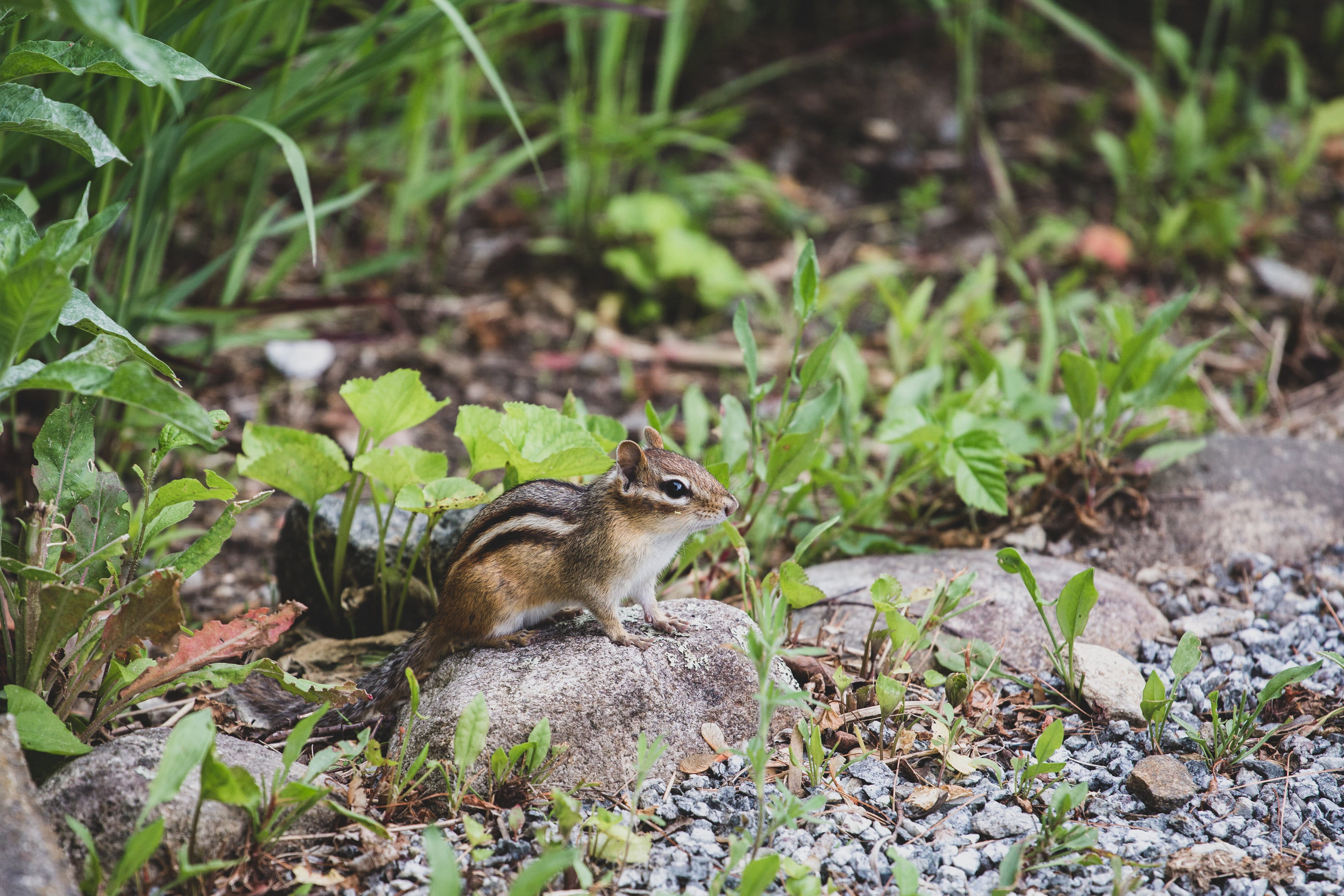
Chipmunks are appealing to watch but can dig under patios, walkways, and foundations, and raid gardens and bird feeders. B's provides humane wildlife removal for chipmunks as well as raccoons and squirrels that have made their way into an attic, shed, or crawl space.
Signs of Rodent Activity
- Droppings, which range from rice-sized for mice to half an inch or more for rats
- Gnaw marks on food packaging, wood, plastic, and wiring
- Nests of shredded paper, fabric, or insulation
- Greasy rub marks along walls and baseboards
- Scratching in walls or ceilings at night
- Pets suddenly fixated on a wall, appliance, or cabinet
How Rodents Get In
Mice need an opening only about a quarter inch across, roughly the width of a pencil, and rats one about half an inch across. Common entry points include gaps around pipes and utility lines, damaged foundation vents, worn garage door seals, openings where the roof meets the walls, and cracks in foundations. Garage doors left open on summer evenings are another common way in. Sealing them with materials rodents cannot chew through, such as metal mesh and sheet metal, is what keeps a treated home from being reinfested.
Cleaning Up Safely
Rodent droppings and nests should never be swept or vacuumed, since that can put disease particles into the air. Air the space out for at least 30 minutes, wear gloves, saturate droppings and nesting material with disinfectant, or with bleach diluted one part to ten parts water, let it sit five minutes, and wipe everything up with paper towels before sealing it in a bag. This follows guidance from the Centers for Disease Control and Prevention.
Traps, Bait, and Exclusion
Each tool in rodent control does a different job. Traps remove rodents with certainty, show exactly how many were caught, and avoid the problem of a poisoned rodent dying inside a wall, where the odor can linger for weeks. Bait reduces a larger population, but it has to be placed carefully, in locations and containers that keep it away from children, pets, and the hawks and owls that eat rodents. Exclusion, sealing the gaps rodents use to get in, is what keeps a property clear once the rodents inside are gone. B's combines all three according to what the inspection finds, rather than relying on any one of them alone.
How B's Rodent Control Works
Every rodent job starts with an inspection to identify entry points and the extent of the activity, since sealing the wrong gap or trapping in the wrong spot wastes a visit. Traps and bait are placed where activity is actually confirmed. Exclusion work follows, closing off how the rodents got in, and a follow-up visit confirms the problem is actually resolved. B's also recommends the changes that make a property less inviting: storing food, pet food, and bird seed in sealed containers, keeping garbage lidded, stacking firewood off the ground and away from the house, and trimming shrubs and vines back from the walls.
B's is licensed and insured, and rodent control quotes and inspections are free, so the extent of the problem and the cost of solving it are clear before any traps go down.