
Spraying for Bugs
B's Weed & Pest Control Services is a family-operated exterminator service near Reno, providing pest control for residential and commercial customers since 2002. Spraying for bugs is one of the core tools behind that work.
What Spraying for Bugs Involves
Spraying applies an insecticide to the specific places where a pest hides, breeds, or gets into a building. Done well, it reaches pests directly, eliminates them, disrupts the population, destroys nests, and leaves a barrier that keeps new pests from moving in. It is effective against the most common pests around Reno, including roaches, termites, bed bugs, ants, spiders, mosquitoes, and wasps.
What Determines Whether Spraying Works
Whether spraying succeeds depends on several things: correctly identifying the pest species, understanding its biology and behavior, choosing the right insecticide, applying it correctly and in the right place, and weighing the environmental impact and safety of the application. The right product in the wrong spot does very little, and a product that works well on one pest can do nothing to another.
This is where a professional makes the difference. A B's technician assesses how severe the infestation is, identifies the most effective insecticide for the specific pest, and applies it safely and efficiently. Spraying is then combined with the other parts of integrated pest management, trapping, exclusion, and sanitation, for control that lasts rather than a one-time knockdown.
Why Store-Bought Sprays Often Fail
Most do-it-yourself sprays kill only the insects they touch. They miss the colony, the nest, and the eggs, so the problem returns within days or weeks. Many are repellent, which scatters cockroaches deeper into walls and can cause Pharaoh ant colonies to split into several new ones. Repeated use of the same product also breeds resistance. Professional treatment targets the source, rotates products where resistance is a risk, and places each application where the pest will actually meet it.
Choosing the Right Formulation
Insecticides come in several forms, and choosing the right one for the place being treated matters as much as choosing the right active ingredient:
- Liquid sprays leave a residual film on surfaces, used for perimeter bands, cracks, and entry points.
- Dusts reach deep into wall voids, electrical boxes, and other enclosed spaces where a liquid cannot go.
- Granules are spread on lawns and landscape beds and activated by watering, used for pests that live in soil and turf.
- Baits are eaten and carried back to the colony, used where spraying would scatter the pest rather than eliminate it.
Perimeter Spraying: The Barrier Around a Home
Much of what gets treated on a routine visit is outside. A perimeter treatment runs a band of insecticide along the foundation and treats the places pests use to get in: door thresholds, window frames, eaves, vents, and the gaps where pipes and wires enter the walls. Because most ants, spiders, and crawling insects come from outdoors, stopping them at the perimeter keeps far more out of the living space than treating inside ever could. Around Reno, perimeter treatment is usually timed to spring, when pests become active, and repeated through the season on a monthly, every-second-month, or annual plan.
Indoor and Outdoor Treatment
Most spraying for bugs happens outside, where the pests come from. Indoor treatment is kept targeted: applied into cracks, crevices, and the specific places pests hide, rather than sprayed across floors, furniture, or open surfaces where people and pets spend their time. Keeping the barrier outside and the indoor work precise controls the pest while limiting what the household is exposed to.
Spraying and Reno Weather
Reno's weather shapes when and how spraying is done. Afternoon winds are common in the Truckee Meadows, and wind carries spray off target, so outdoor applications are timed for calmer conditions. Rain soon after an outdoor treatment can wash it away before it dries, and extreme heat shortens how long some products last on sun-baked surfaces. Timing a treatment to the weather is part of making it work.
How Spraying Is Used, Pest by Pest
Roaches
Roaches hide during the day in cracks, crevices, and hidden corners near food and water, so spraying for roaches means treating those exact spots rather than open surfaces. A crack-and-crevice application reaches where roaches live and leaves a residual that keeps working after the visit. Because sprays cannot penetrate the egg capsule, roach control takes follow-up treatments, and baits are usually used alongside the spray. See cockroach pest control.
Termites
Termites threaten the structure of a building itself. Termite treatment creates a protective barrier in the soil around foundations and at the points where wood meets the ground, so termites traveling from their underground colonies cannot reach the structure. See termite control in Reno.
Bed Bugs
Bed bugs hide in mattress seams, bed frames, furniture joints, and cracks near where people sleep. Spraying treats those hiding places, but it is only one part of bed bug control: B's combines it with heat treatment and a thorough inspection so every life stage, including the eggs, is eliminated.
Rodents
Spraying does not control rats and mice; traps, bait, and exclusion do. Where spraying helps is with the fleas, mites, and other insects that rodents leave behind, and with the insects that draw rodents to a property in the first place. It supports rodent control rather than replacing it. See rodent control in Reno.
Ants
Ants travel in trails and gather where food is, so spraying targets the trails, entry points, and nests themselves. For some species, especially Pharaoh ants, a repellent spray can cause a colony to split into several, so baits are used instead of sprays. See ant pest control.
Spiders
Spiders hide and build webs in corners, windowsills, eaves, garages, and storage areas. Treating those spots, and removing existing webs, creates a barrier that discourages spiders from settling in, while the perimeter treatment reduces the insects they feed on. See spider pest control.
Mosquitoes
Mosquitoes breed in standing water and rest in shaded vegetation during the day. Spraying targets the vegetation and resting areas around a yard, while larvicides and source reduction deal with the standing water in planters, gutters, and irrigation boxes where the next generation develops.
Wasps and Bees
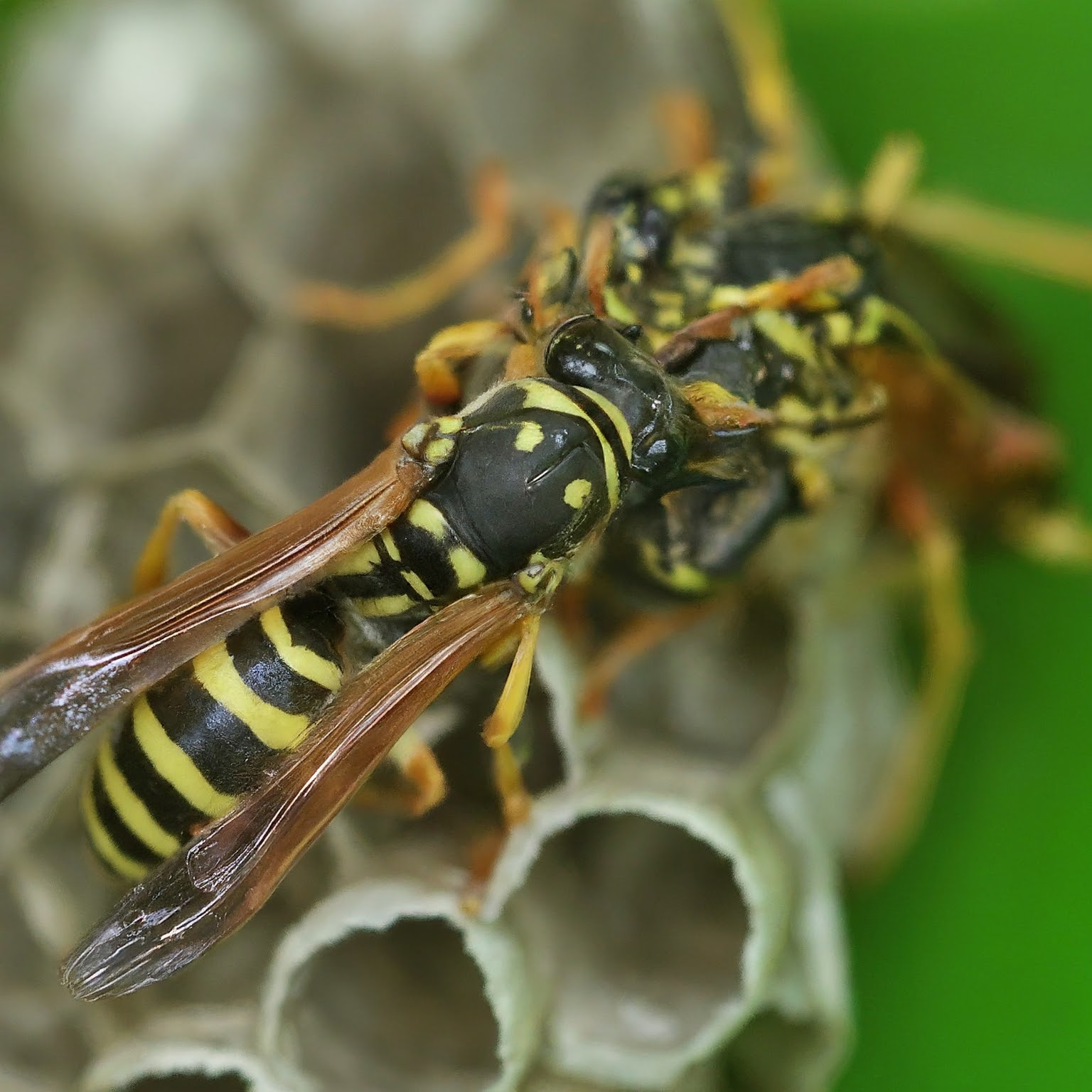
Wasps and bees play vital roles in the ecosystem, but a nest near a door or patio is a real hazard. Wasp nests are treated directly, and entry points into eaves and wall voids are sealed afterward so a new colony cannot use them. Bees are handled with extra care, relocated where possible rather than eliminated. See wasp extermination.
What to Expect on a Spraying Visit
A visit starts with an inspection and a conversation about what has been seen and where. The technician then identifies the pest, explains the treatment plan, applies the treatment inside and out as needed, and tells the household how long to keep children and pets off treated surfaces, typically until they have dried. For most pests a follow-up is part of the plan, since one application rarely catches every life stage.
Safety and Care
B's uses environmentally friendly products whenever possible and methods that are safe for families and pets. B's technicians are certified professionals trained in pest control, and the business is licensed and insured. Quotes and inspections are free, and the technician explains which products are being used, where, and why.